
INFLUENCE MAPPING
Influence Mapping is East African Solutions’ proprietary methodology for understanding the terrain surrounding a business, asset, opportunity or strategic decision or any combination of these.
It reveals how the influences within that terrain interact, where value may be created or constrained and which decisions and engagements have the greatest potential to shape the outcome.
The methodology was developed around the commercial, financial, organisational, institutional and stakeholder dynamics that characterise East Africa, although its principles can be applied elsewhere.
Why Influence Mapping?
Strategic decisions are rarely made within simple or static environments. Businesses, assets and opportunities are shaped by interconnected commercial, financial, organisational, institutional and stakeholder influences.
Attention naturally gravitates towards the most visible opportunity or constraint. Yet declining performance, operational friction or apparent market potential may be symptoms of conditions located elsewhere within the wider system.
Because these influences are interconnected, decisions cannot be evaluated in isolation. Strengthening one relationship may weaken another. Resolving friction in one area may create new constraints elsewhere. A decision may also affect future choices, create new dependencies or change what remains possible.
Just as no expedition begins by choosing a route before understanding the terrain, a course of action should not be determined before understanding the conditions in which it must succeed.
Many strategic processes begin by asking:
“What should we do?”
Influence Mapping begins one step earlier:
“What do we need to understand before deciding what to do?”
This means clarifying the outcome being pursued; distinguishing what is known, assumed or potentially overlooked; identifying the influences capable of shaping the outcome; and considering the realistic choices available including whether to proceed, adapt, postpone or not proceed.
It also means establishing how those choices should be compared, what resources and capabilities each would require and what direct, indirect or cascading consequences they may create.
Influence Mapping connects these considerations so that possible courses of action can be evaluated within the wider system in which their consequences will unfold. This enables clients to determine what matters most, what could shape the outcome and how finite resources can be directed towards creating the greatest value.
“Enduring enterprise value is created by directing finite resources towards the influences and interdependencies most capable of shaping long-term outcomes.”
The Terrain of Influence
Stakeholder mapping identifies the individuals and organisations that may matter to a particular objective. Influence Mapping goes further by examining the wider system through which influence operates and strategic outcomes are shaped. East African Solutions refers to this as the Terrain of Influence.
The terrain encompasses the systems, relationships and external forces that may shape an outcome or be affected by the course of action chosen. Some influences are close and direct. Others operate at a greater distance or through relationships and intermediaries. Their significance changes according to the objective, surrounding conditions and interactions between different parts of the terrain.
The illustration below shows common categories of influence that may reveal constraints, opportunities and potential consequences. It is not a fixed template: every Terrain of Influence is constructed around the particular business, asset, opportunity or strategic decision being examined.
How Influence Mapping Works
The Terrain of Influence reveals the wider system surrounding a strategic question. Influence Mapping then examines what within that terrain matters most, how influence operates through it and how different courses of action could affect or reshape it.
The methodology progresses through six connected stages, translating an understanding of the terrain into strategic direction, purposeful engagement and long-term value creation.
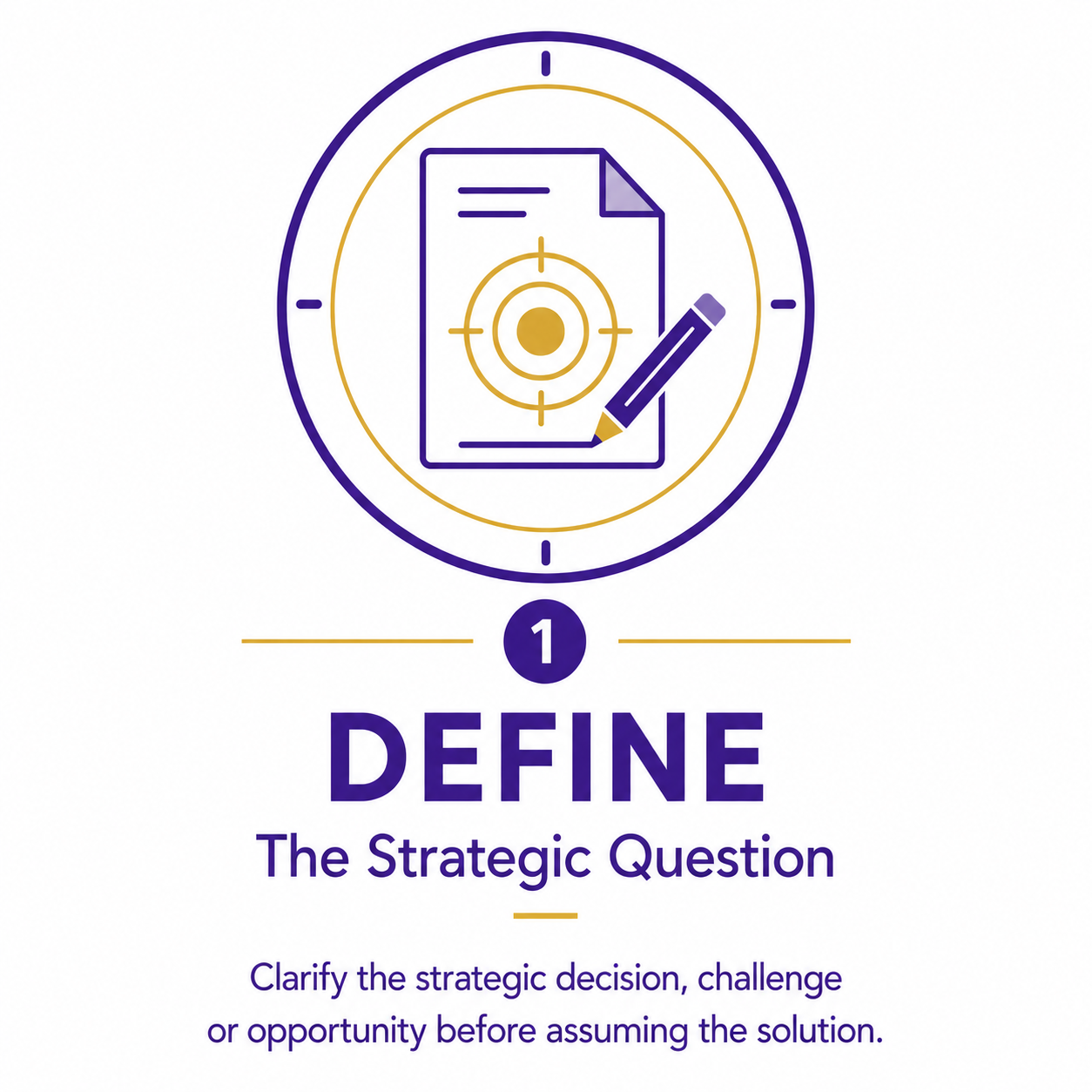
Define the question before assuming the solution.
Influence Mapping defines the decision, challenge or opportunity being examined, the outcome sought and the scope of the analysis.
This prevents an assumed solution from narrowing the enquiry prematurely, aligns those involved around a common objective and establishes what must be understood before possible courses of action can be evaluated.
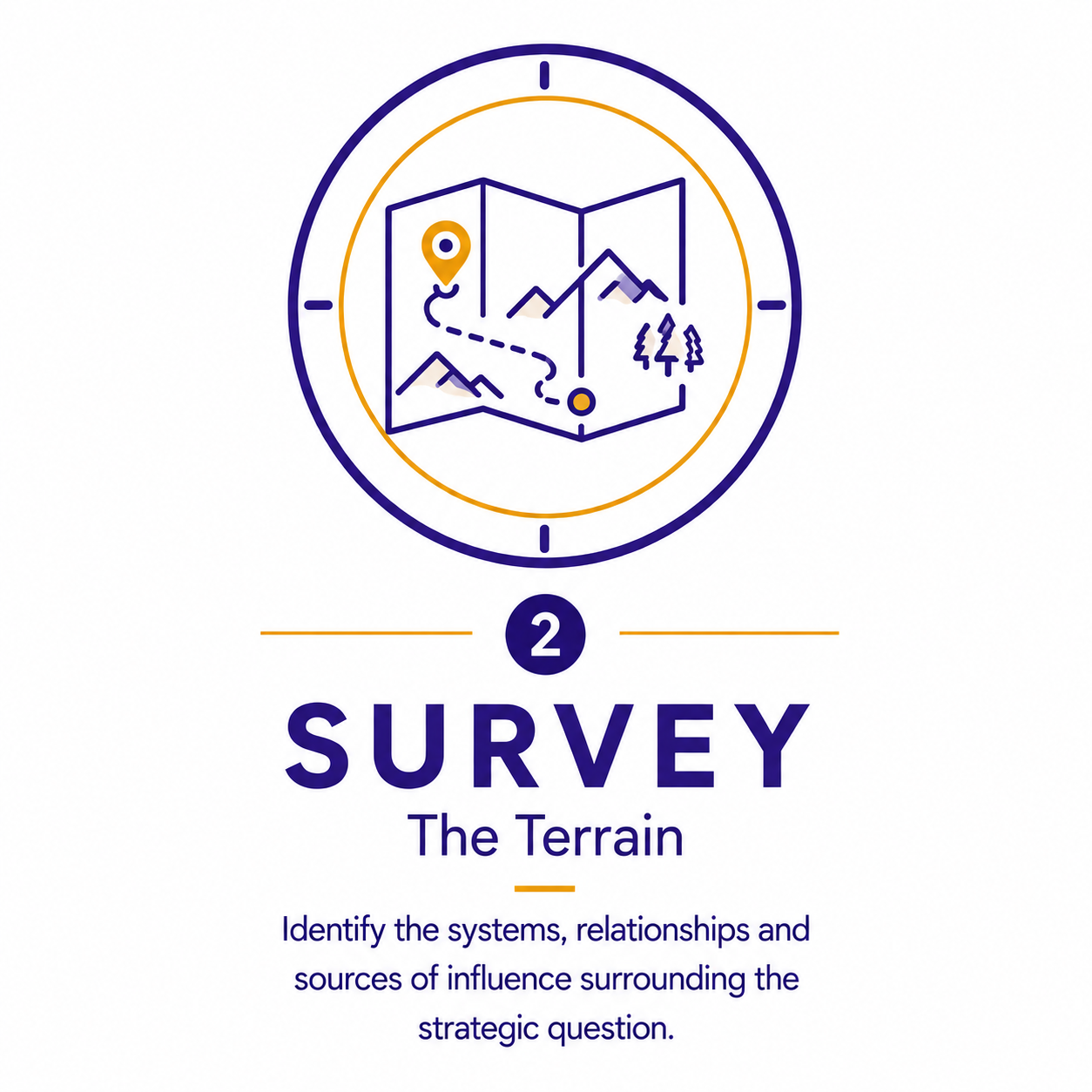
Survey the wider terrain before deciding what matters most.
Once the strategic question has been defined, Influence Mapping surveys the organisations, individuals, systems, relationships and external forces that could shape the outcome or be affected by the course of action chosen.
This establishes the breadth of the terrain before its interactions and relative influences are interpreted, reducing the risk of overlooking hidden constraints, emerging opportunities or less visible factors capable of materially affecting the decision.
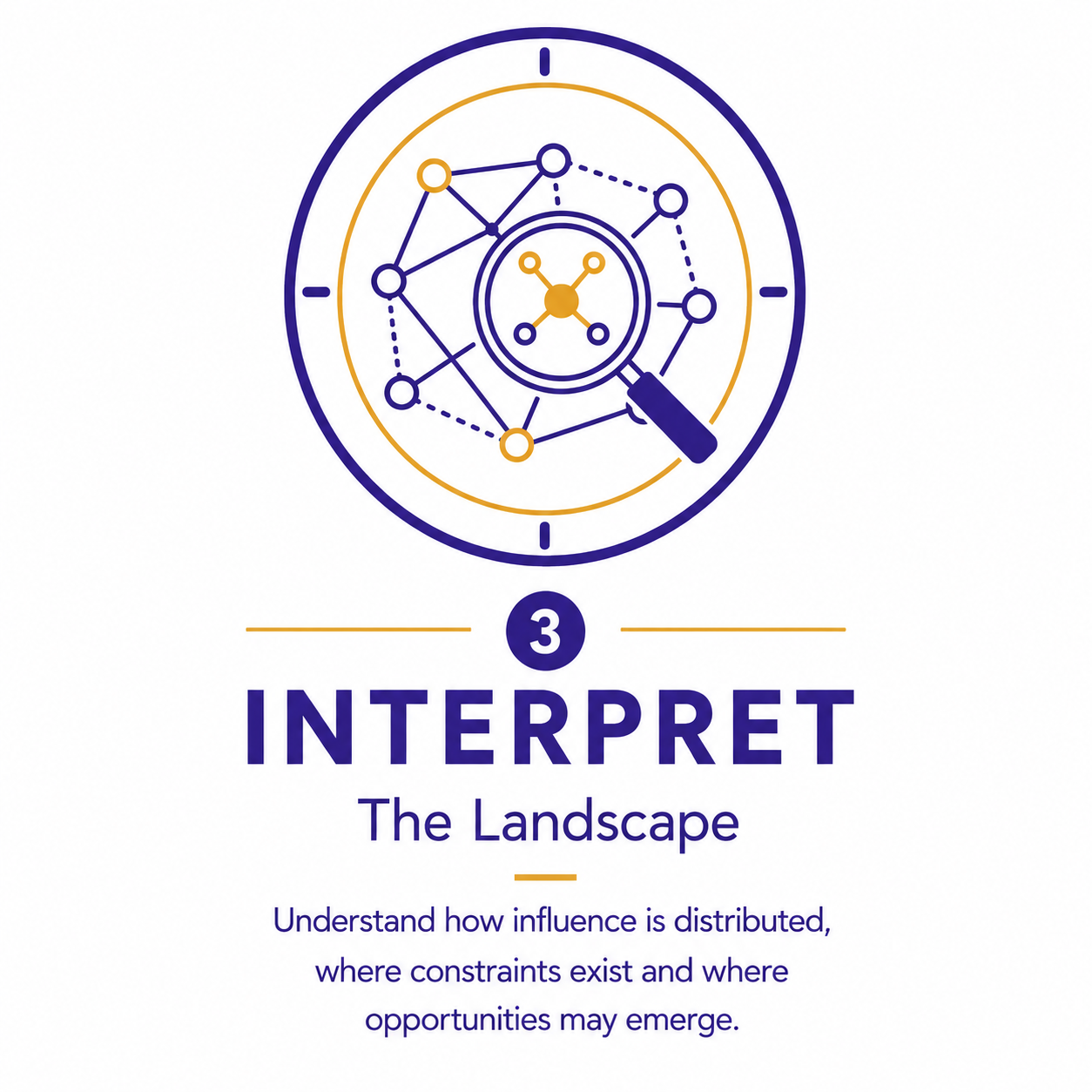
Interpret how influence operates and where it matters most.
Having surveyed the terrain, Influence Mapping interprets how its elements interact, where influence is concentrated and how changes within one part may affect outcomes elsewhere.
Not every interaction carries equal significance. Interpretation distinguishes what is merely visible from what is genuinely capable of shaping the outcome, revealing constraints, opportunities and where strategic engagement may create the greatest value.
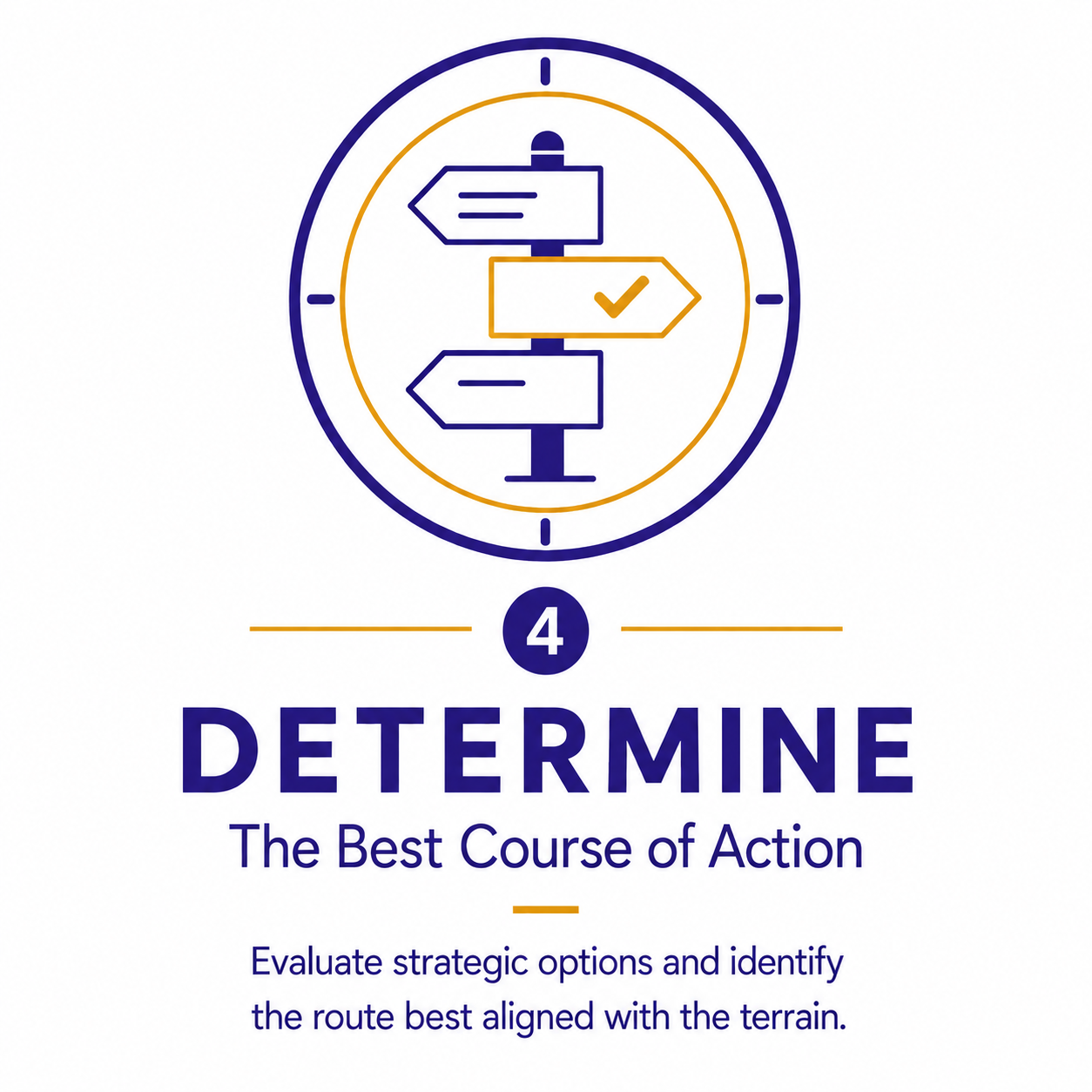
Determine the course of action best aligned with the terrain.
Insights from the preceding stages provide the basis for comparing realistic options including whether to proceed, adapt, postpone or not proceed.
Each option is considered against the objective being pursued, the resources and capabilities required, its dependencies, the appropriate timing and sequence and the consequences it may create across the wider terrain.
This establishes a contextually grounded basis for determining how to proceed.
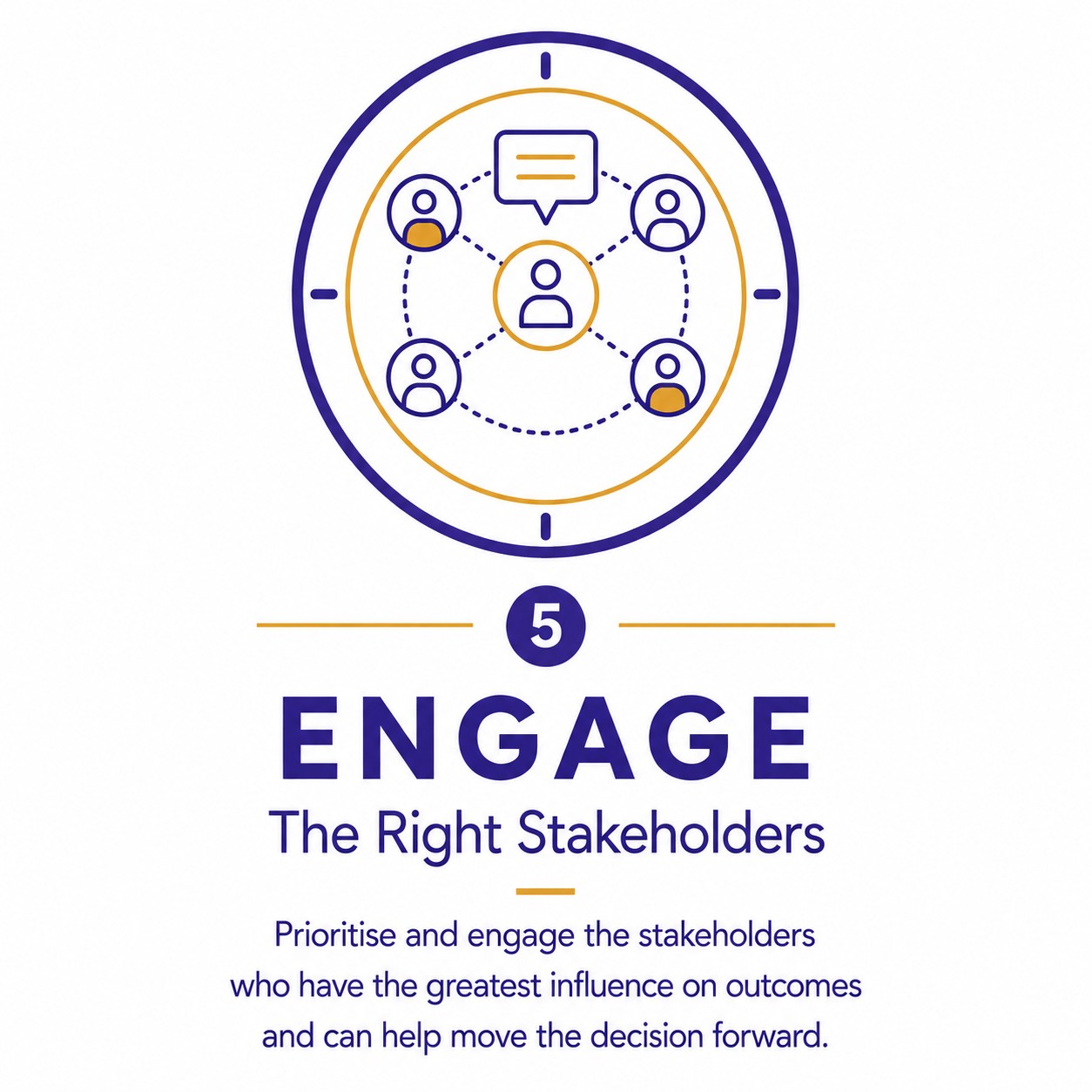
Engage purposefully with those most capable of shaping the outcome.
Once a course of action has been determined, Influence Mapping identifies which stakeholders and relationships require engagement, in what sequence and towards what objective.
Strategic engagement is more than communication. It concentrates attention and resources on the interactions most likely to advance the selected course while considering how engagement within one part of the terrain may affect others.
This converts strategic understanding into coordinated action without attempting to influence every part of the terrain.
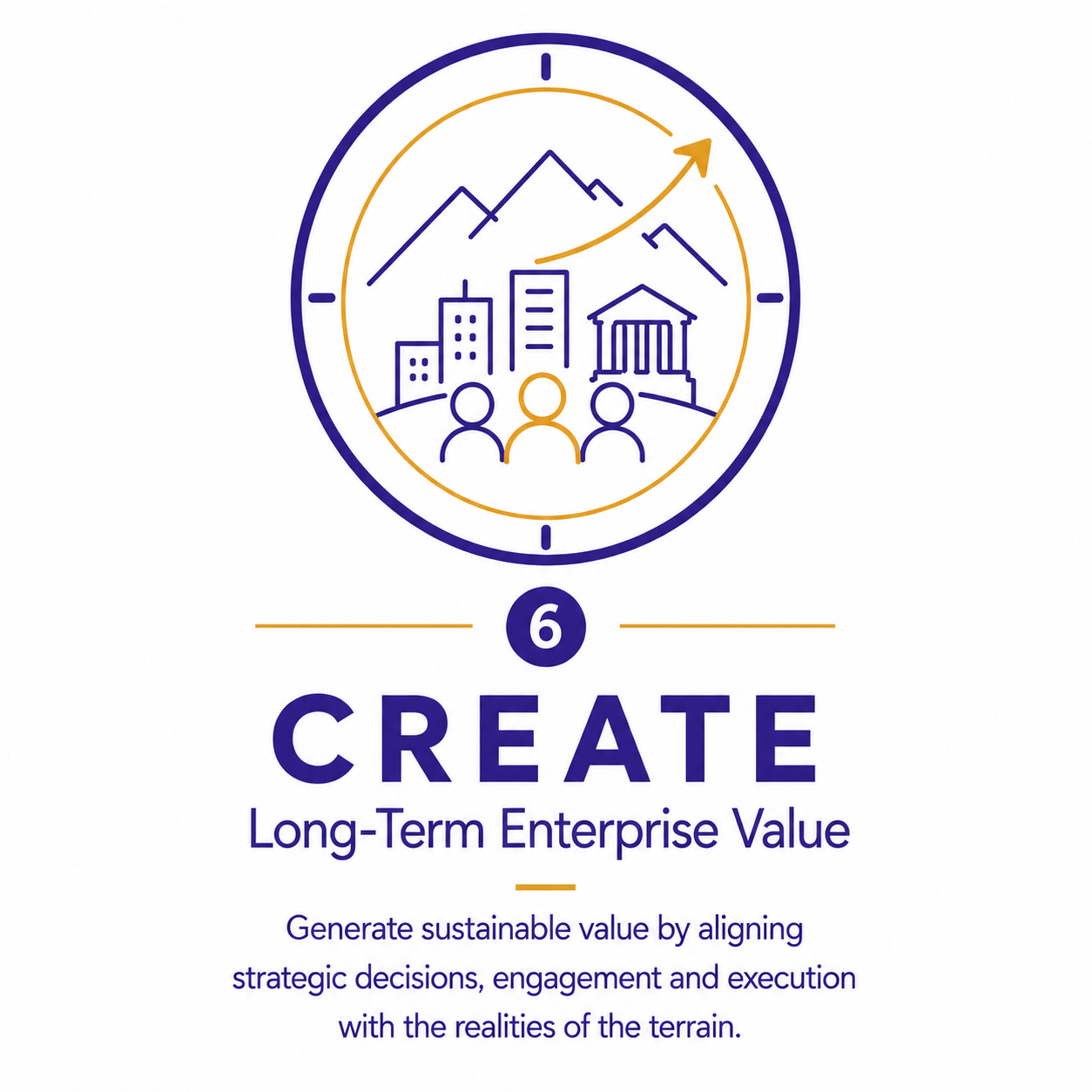
Create long-term value through better-aligned decisions and action.
Influence Mapping is not an end in itself. It connects a clearly defined objective and wider understanding of the terrain with an informed course of action and purposeful engagement.
By aligning decisions, finite resources and engagement with the influences most capable of shaping the outcome, clients can strengthen resilience, improve performance and create enduring enterprise value.
From Understanding to Action
The outcome of Influence Mapping is not simply a representation of the surrounding terrain. It provides a practical basis for determining what should receive attention, which relationships and capabilities matter, how priorities should be sequenced and what resources will be required.
Where an engagement continues beyond strategic direction, East African Solutions remains alongside the client to advance priorities, coordinate specialist support and implement the next steps.